

Why Well Water Needs a Different Filtration Approach
A private well gives homeowners control over their water supply, but it also makes water-quality management their responsibility. Unlike municipal water, well water does not necessarily receive centralized treatment or routine monitoring before reaching the home.
Sand in the faucet aerator, orange stains in the laundry, white scale on showerheads, or a rotten-egg smell can all point to water-quality issues. The difficulty is that these symptoms have different causes and require different treatment methods.
A whole-house water filtration system for well water treats water where it enters the home, supplying multiple fixtures from a central point. The right system can reduce specific contaminants or improve water quality, but a standard multi-stage filter is not a universal solution.
The most reliable starting point is a water test, followed by a treatment plan matched to the results.
What Should You Test for in Well Water?
Before selecting equipment, identify the substances that need treatment. The appearance and smell of water can provide clues, but they cannot establish whether the water is safe to drink.
The U.S. Environmental Protection Agency recommends annual testing of private wells for total coliform bacteria, nitrates, total dissolved solids (TDS), and pH. Additional tests may be necessary based on local geology, nearby agricultural activity, industrial sites, or changes in water quality. Use a laboratory certified for drinking-water analysis.
Several common findings deserve particular attention.
Sediment, Sand, and Rust
Visible particles can come from the well, pump, plumbing, or corrosion. A sediment filter can capture suspended particles before they enter household plumbing and downstream treatment equipment.
The appropriate micron rating depends on particle size, sediment loading, and acceptable pressure loss. A finer cartridge is not automatically better: it may clog more quickly when the incoming water carries substantial sediment.
Iron and Manganese
Elevated iron and manganese can cause orange, brown, or black staining and affect water appearance. A standard sediment cartridge may capture particles that have already formed, but it will not necessarily remove dissolved iron or manganese.
Depending on the concentrations and water chemistry, treatment may require oxidation followed by filtration, specialized media, or another process designed for the specific water conditions.
Hardness and Unpleasant Odors
Calcium and magnesium cause hard-water scale. A conventional ion-exchange water softener is generally used to reduce these minerals; standard sediment and carbon cartridges do not perform the same job.
A rotten-egg odor may indicate hydrogen sulfide, although other causes are possible. Testing helps determine whether the problem requires source correction, specialized filtration, or another treatment method. 
Which Filtration Stages Does Well Water Need?
There is no fixed number of stages that works for every well. Each stage should have a defined purpose.
|
Treatment method |
Main purpose |
Important limitation |
|
Sediment filtration |
Captures sand, silt, rust, and suspended particles |
Does not remove all dissolved contaminants |
|
Activated carbon |
Reduces chlorine, taste, odor, and selected organic compounds, depending on the media |
Does not reliably address every chemical or mineral |
|
Water softening |
Reduces calcium and magnesium hardness |
Does not disinfect water |
|
Iron and manganese treatment |
Targets these metals using suitable media or treatment processes |
Selection depends on concentration and water chemistry. |
|
UV disinfection |
Inactivates susceptible microorganisms under suitable operating conditions |
Does not remove dissolved chemicals or particles |
Treatment order matters. Heavy sediment can shorten the life of downstream cartridges, while iron deposits can interfere with other treatment equipment. Where disinfection is required, pretreatment and operating conditions must support the selected system.
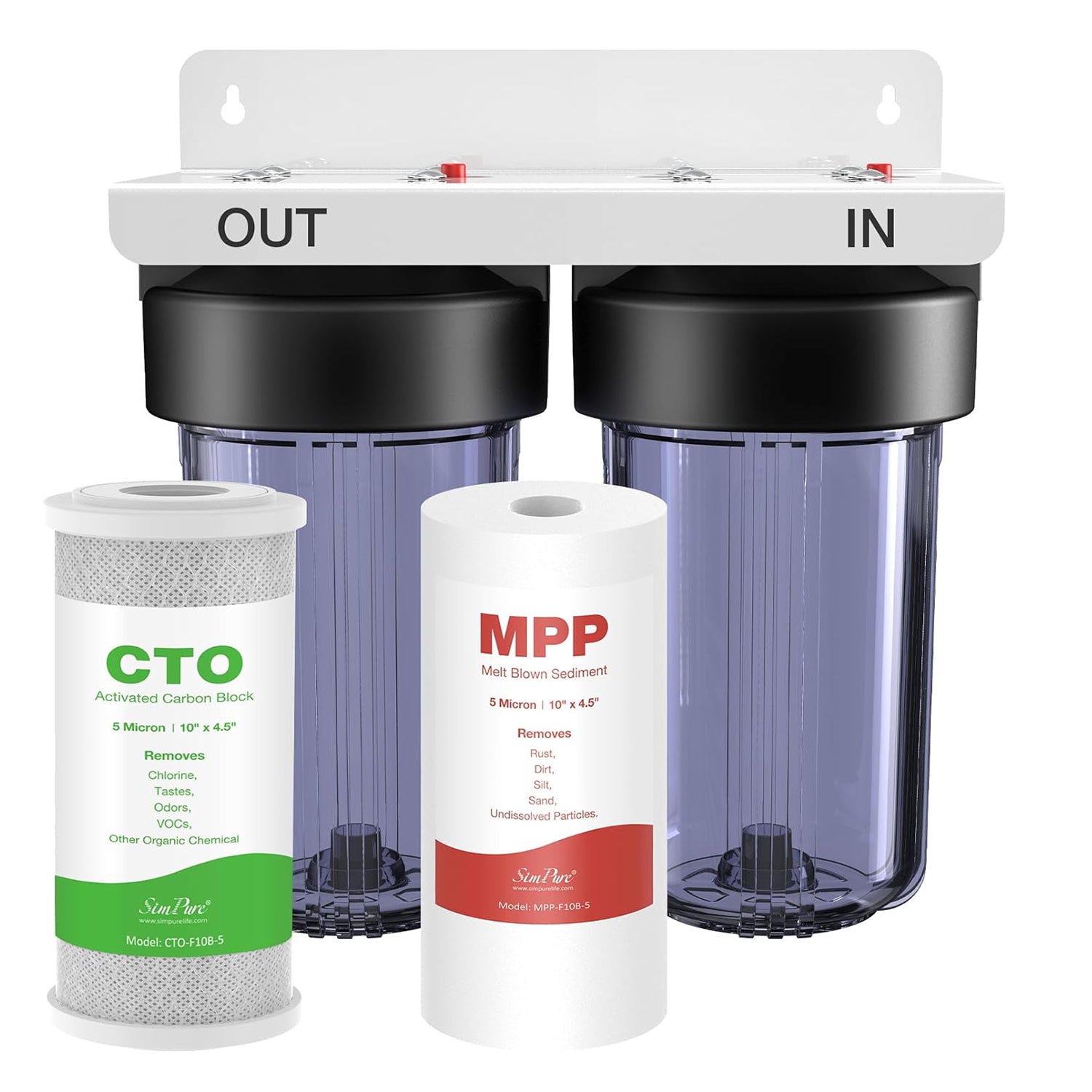
For homeowners whose test results primarily indicate sediment and certain taste or odor concerns, a whole house water filtration system combining sediment and carbon filtration may be a reasonable starting point. More complex findings may require additional equipment. 
Choosing a Whole House System for Your Well
Match the System to Your Water Test
Start with the laboratory results, not the number of filter housings. A three-stage system can combine several useful filtration functions, but the stage count alone does not establish that it can remove iron, arsenic, nitrate, or microorganisms.
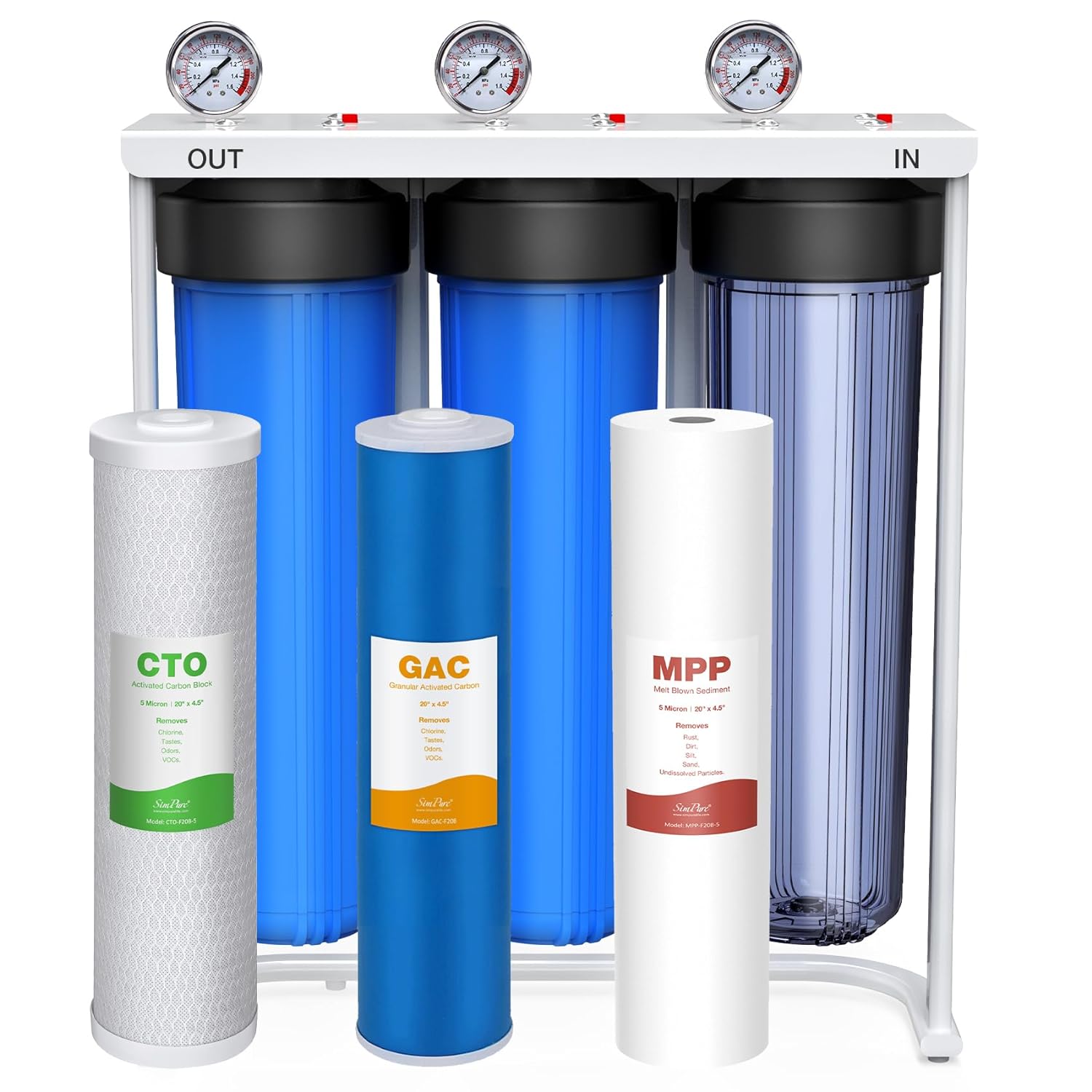
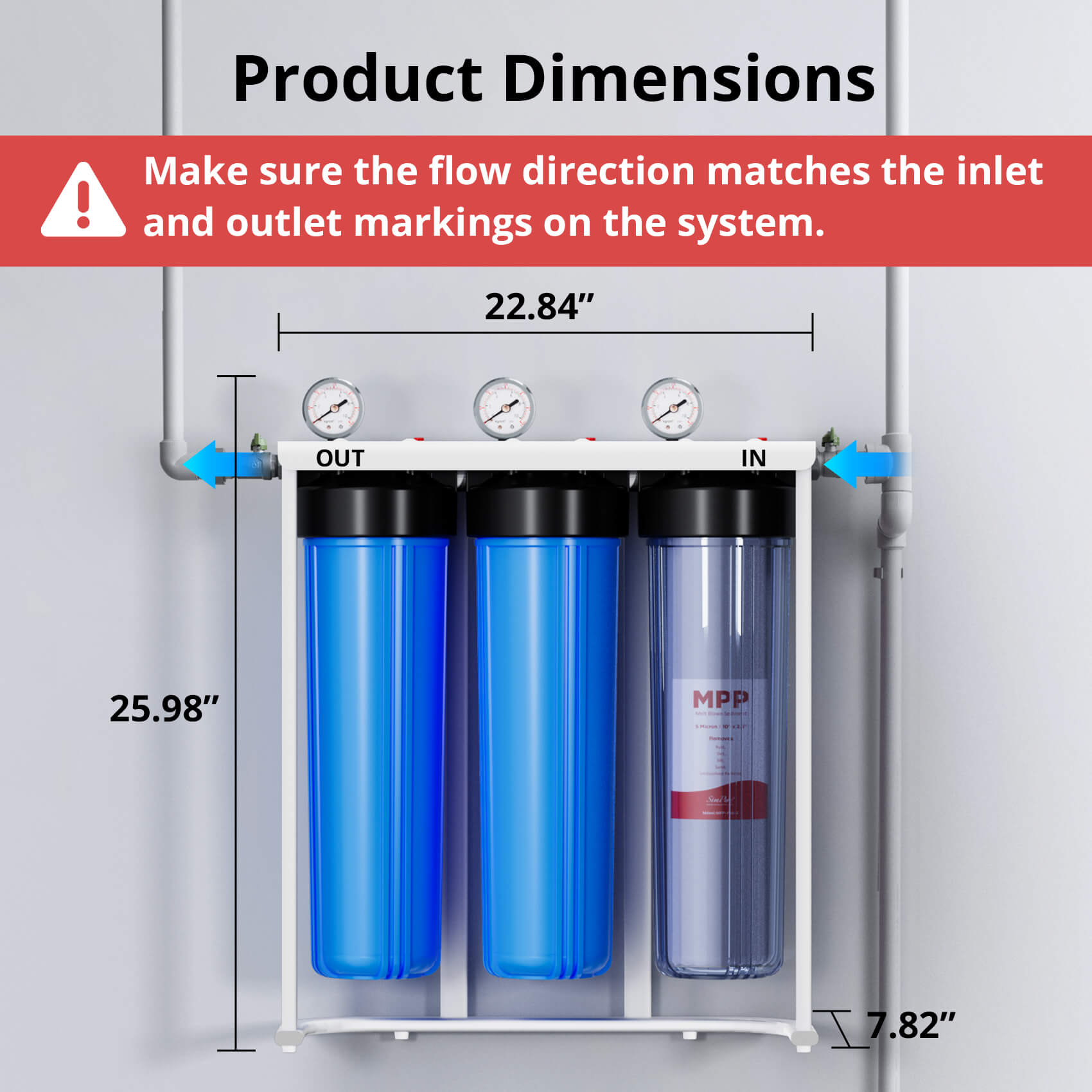
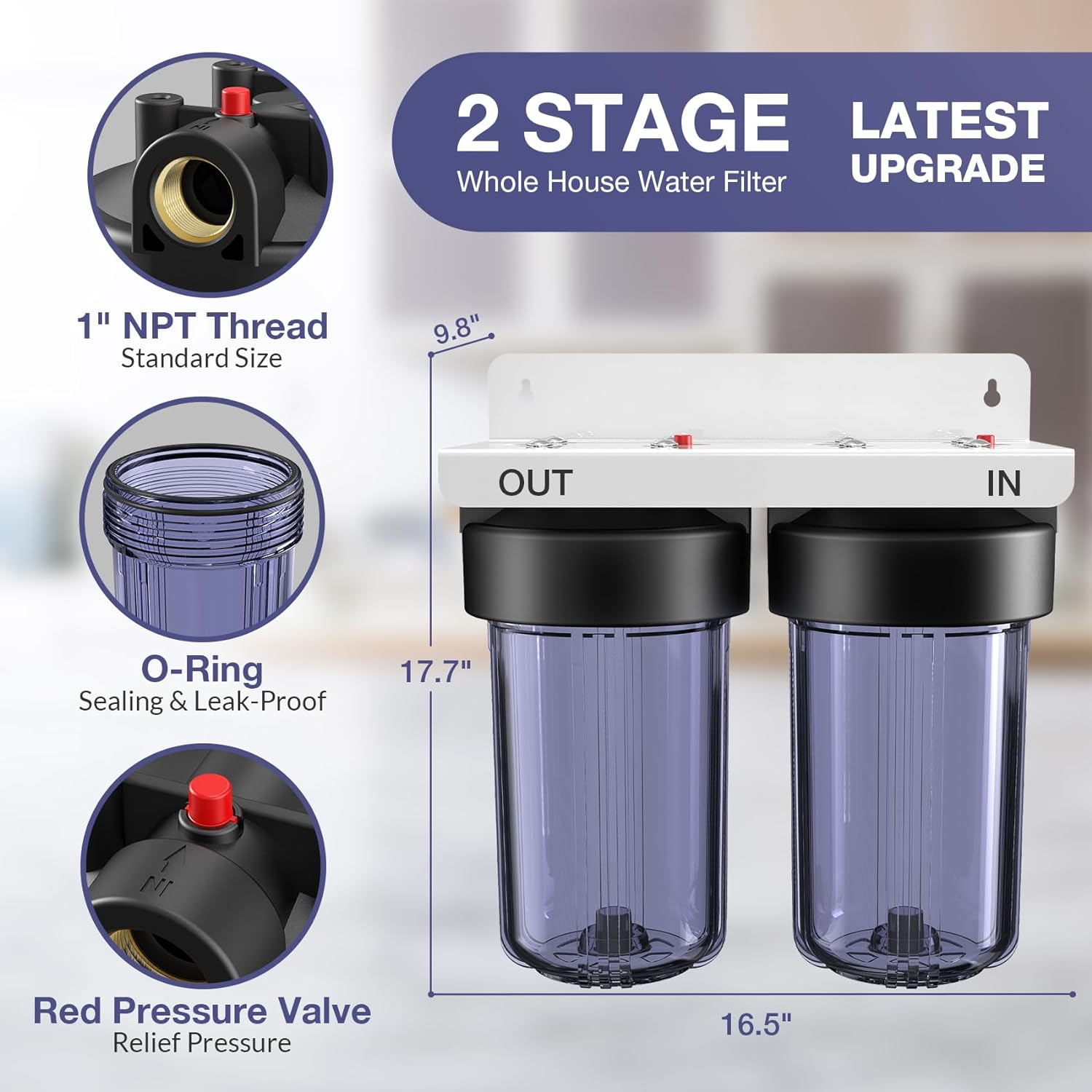
The SimPure DB20P-3 three-stage whole-house filtration system uses sediment, granular activated carbon, and carbon block cartridges. It is designed for sediment and certain taste and odor concerns in household water. If testing identifies contaminants beyond those functions, additional treatment may be necessary.
Check Flow Rate and Pressure
The system must supply the household during periods of peak demand. Consider how often showers, washing machines, and faucets run at the same time. Compare the system's rated flow and pressure requirements with the home's actual needs.
A filter that is too restrictive can cause pressure loss, particularly as cartridges accumulate particles. Homes with high sediment loads may need a separate prefilter or a backwashing sediment system rather than relying entirely on disposable cartridges.
Account for Maintenance
Cartridge life depends on water quality and consumption. A well with heavy sediment may require more frequent changes than a household using relatively clear water.
Check replacement costs, cartridge availability, housing compatibility, and the ease of depressurizing the system for service. For compatible options, SimPure provides whole house replacement filter cartridges.
Does a Whole House Filter Make Well Water Safe to Drink?
Not by itself. A system that improves clarity and odor may still leave dissolved contaminants or microorganisms untreated.
If testing detects bacteria or a chemical contaminant at a concerning level, select treatment specifically designed and validated for that finding. UV disinfection, for example, can address certain microbial risks when the water quality, flow rate, and equipment maintenance meet the system's requirements. It does not replace chemical filtration.
After installation, test the treated water when appropriate to confirm that the system is achieving its intended result. Continue routine well testing even when the water looks and tastes normal.
Frequently Asked Questions
What is the best whole house water filtration system for well water?
The best system depends on the well's water chemistry. Sediment and carbon filtration may suit some homes, while others need dedicated treatment for hardness, iron, manganese, chemicals, or microorganisms.
Can a whole-house filter remove bacteria from well water?
A standard sediment-and-carbon system should not be assumed to disinfect well water. If testing identifies microbial contamination, use an appropriate disinfection method and address any underlying well or plumbing problem.
Should I use reverse osmosis with well water?
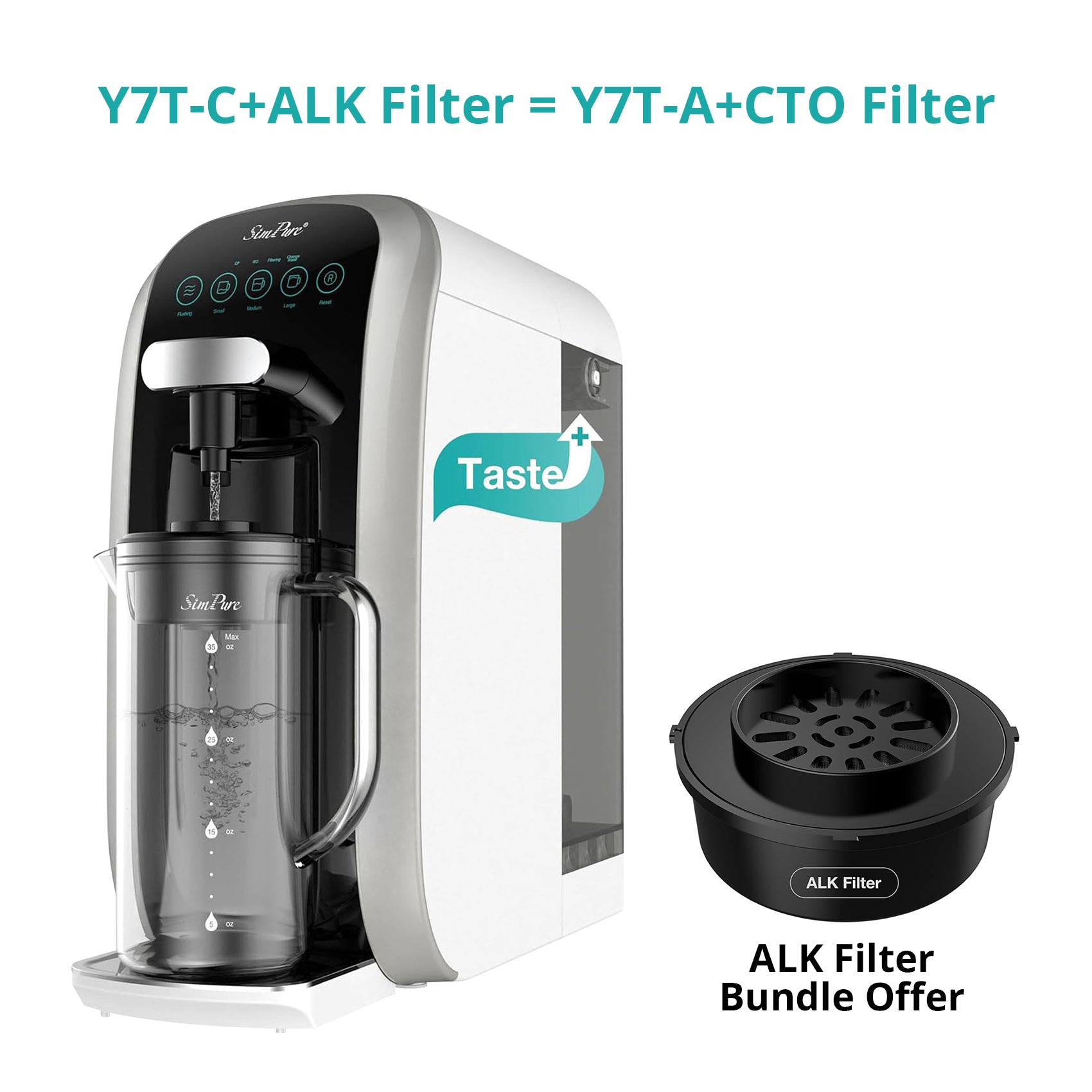
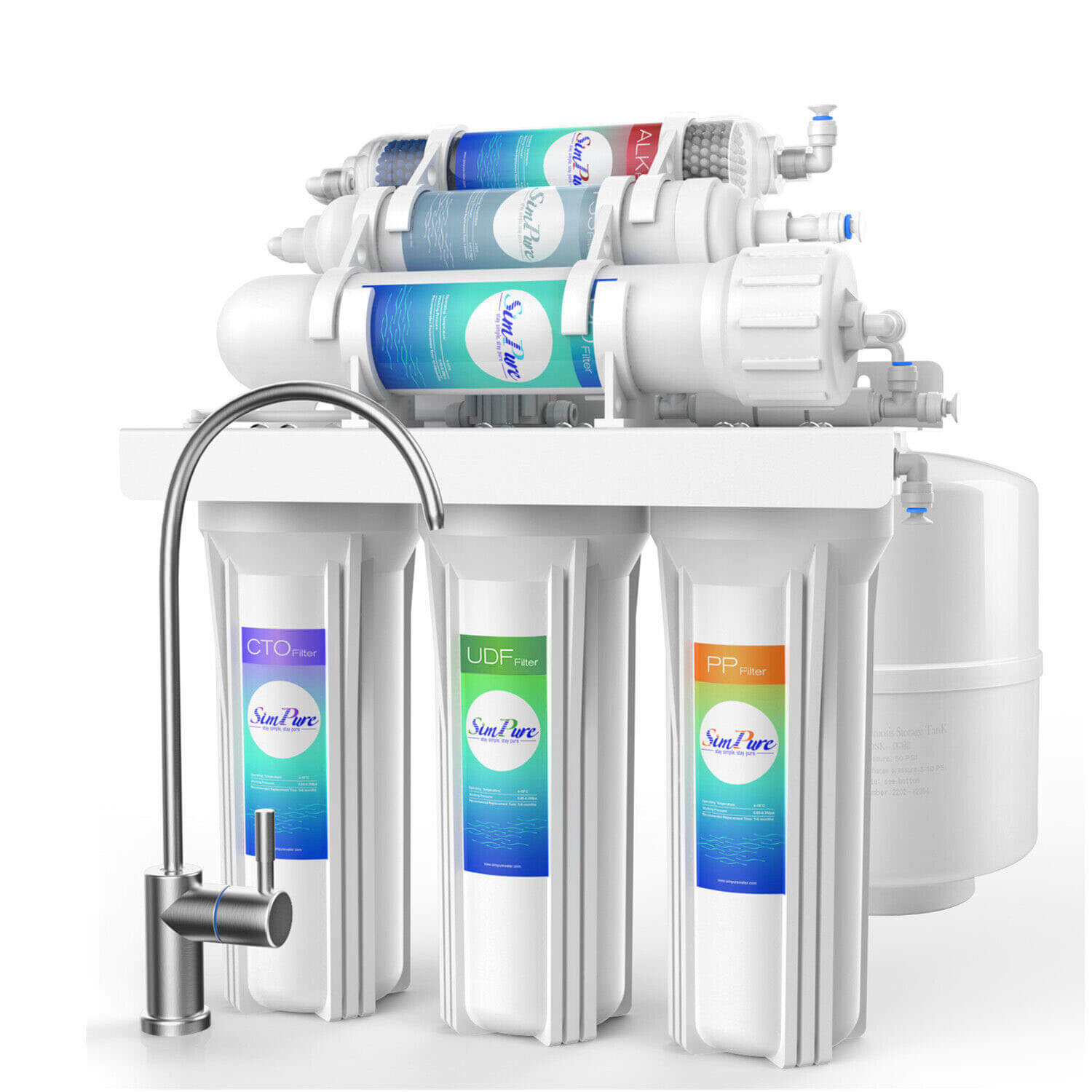
Reverse osmosis may be suitable for drinking and cooking water when the system is compatible with the source water. Pretreatment may be necessary, and the system should have documented performance for the contaminants being targeted.
How often should well water be tested?
Annual testing for total coliform bacteria, nitrate, TDS, and pH is a useful baseline recommended by the EPA. Test sooner if flooding occurs, the well or pump is repaired, or the water's taste, color, or odor changes.